Explainer
Jumanji Slot: The Board Game and Four Random Features
The short answer
NetEnt’s Jumanji combines a five-reel slot with a bonus board traveled using two six-sided dice. Four named modifiers also change the reel screen: Sticky Vines, Monsoon Wilds, Monkey Mayhem and Wild Stampede. Following the current feature name is the easiest way to understand what the next animation is doing.
In this article
The Jumanji slot board game
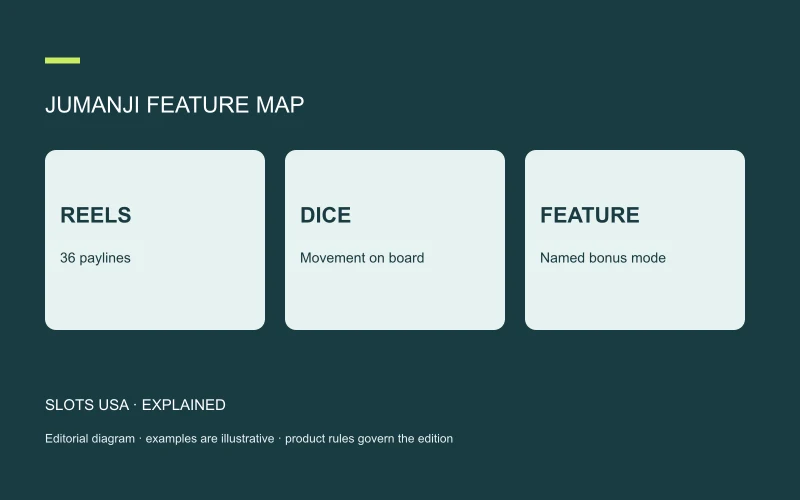
The provider’s rules summary describes a 3-4-5-4-3 layout with 36 lines. In the bonus, dice move a token around a board containing feature spaces. The board’s corners correspond to free-spin versions of the main-game features.
There are therefore two useful maps: the reel grid and the bonus route. Reel positions explain combinations; board positions explain which feature the token encounters. Keeping the maps separate makes it easier to describe a bonus that changes its visual setting as it progresses.
Four modifiers, four different actions
| Feature | Action described by NetEnt |
|---|---|
| Sticky Vines | Winning symbols and initial Wilds remain for a further spin |
| Monsoon Wilds | One or two reels receive Wild overlays |
| Monkey Mayhem | Current wins settle before a symbol reshuffle |
| Wild Stampede | Rhinos leave 4–9 Wild symbols on the screen |
This table is a feature map, rather than a ranking. Each row identifies the action to watch. For a detailed account of a particular round, add its wager and the settled amounts from the game’s history.
How to keep a useful bonus log
Use a line for each move around the board: starting space, dice result, landing space and awarded feature. For example, a purely illustrative dice result of three and four moves the token seven steps. The board’s own direction, spaces and rules determine where those steps lead.
If the landing leads to free spins, begin a new line for that feature’s allocation and settlement. This preserves the relationship between the board event and the reel event without combining dice totals with cash awards. One counts movement; the other measures the result of a game round.
Reading awards without counting them twice
Monkey Mayhem is a particularly useful example because NetEnt describes a settlement followed by a shuffle. When following that animation, note which amounts have already been credited and which counter is cumulative. A cumulative total already includes earlier items in its stated scope.
Illustrative example: a display first credits $1 and later shows a final cumulative award of $4 for the same sequence. The final amount is $4; adding the earlier dollar again would describe a different accounting total. The labels and round record establish the actual scope on your screen.
Where this fits among game features
Jumanji is useful for understanding how one title can combine a reel system, random modifiers and a board-based bonus. Its theme ties those elements together, while the help screens explain each element’s rules separately.
Read scatter and Wild symbols for substitution basics, or reading a paytable for the award units. Together they provide the vocabulary needed to follow the board’s transition back to the reels.
Quick question
Does a dice total tell you the cash award? It describes movement on the bonus board. The space reached, the resulting feature and its settled reel awards provide the rest of the record.