Explainer
Asgardian Stones: Colossal Symbols and Crush Explained
The short answer
Asgardian Stones combines Avalanche with Colossal Symbols that cover 2×2 or 3×3 positions. Colossal Crush can then remove rows beneath a large symbol as the screen develops. The useful distinction is between the size of the displayed symbol and the award that eligible paylines produce from the completed screen.
In this article
Asgardian Stones Colossal Symbols
The NetEnt feature description identifies a five-reel, three-row game with 20 lines. Colossal versions occupy blocks of positions; the provider says two or more Colossal Symbols cannot be visible simultaneously. A large symbol may be fully or partly visible depending on its placement.
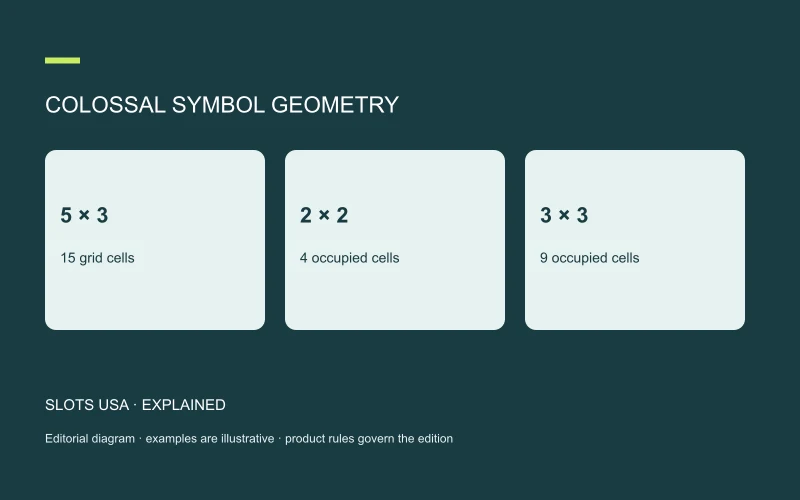
For orientation, think of the ordinary grid as fifteen cells. A complete 2×2 block occupies four of those cells, while a complete 3×3 block occupies nine. This geometric comparison describes occupied positions. The paytable and the completed line routes establish their monetary effect.
How Avalanche creates the next screen
A paid line can start an Avalanche: the participating symbols are removed and new symbols enter. A large symbol can arrive as part of that refill. Its movement and its influence on the grid should be read in the order the game presents them.
One useful sketch has three snapshots: initial screen, removed winning positions and refilled screen. Circle the large block in the third snapshot. The sketch makes it clear which symbols survived and which positions were filled during that stage of the same sequence.
What Colossal Crush adds
The provider describes the possibility of a Colossal Symbol crushing rows beneath it. The feature’s movement also takes account of spaces left by previous wins. Watching the cells immediately below the block is therefore a practical way to understand the next animation.
| Stage | Observation to record |
|---|---|
| Winning line | The route the game pays |
| Avalanche | Positions removed and refilled |
| Colossal arrival | Block size and visible placement |
| Crush movement | Rows cleared below the block |
These observations explain the screen, while the round history explains the settlement. Keeping both gives a fuller account than the final picture alone.
A numerical example of two different units
Imagine, purely as an accounting example, that a round displays a complete 3×3 symbol block and eventually credits $4 from a $0.40 wager. Nine occupied cells describe the geometry. Ten times the wager describes the award, because $4 ÷ $0.40 = 10. The two numbers answer separate questions.
The same principle applies to free-spin counters, feature multipliers and credits. Read the label beside each number before using it in a calculation. A title with dramatic symbol sizes can still be reported clearly with a small set of consistently labeled values.
How to read the title’s help screens
Start with Avalanche, then Colossal Symbols, then Colossal Crush. That order builds from the underlying movement to the added block feature. Confirm the complete game title and current edition when comparing a video or a screenshot from another catalog.
The guide to reading a paytable develops award units, and ways versus paylines explains route-based combinations.
Quick question
Does a nine-cell symbol mean nine separate paid awards? Symbol area describes the layout. The game’s eligible line combinations and final settlement establish the awards for that screen.